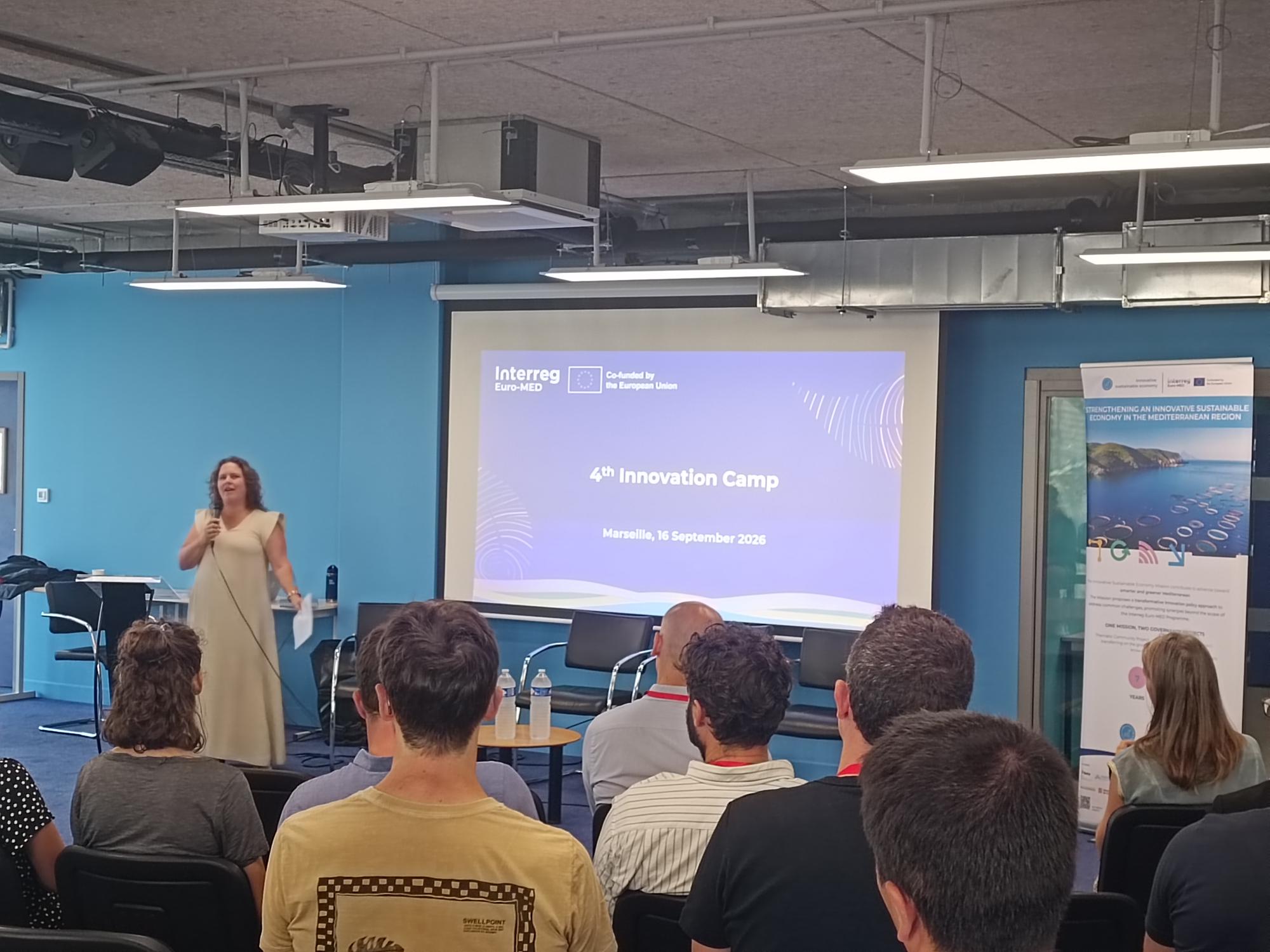
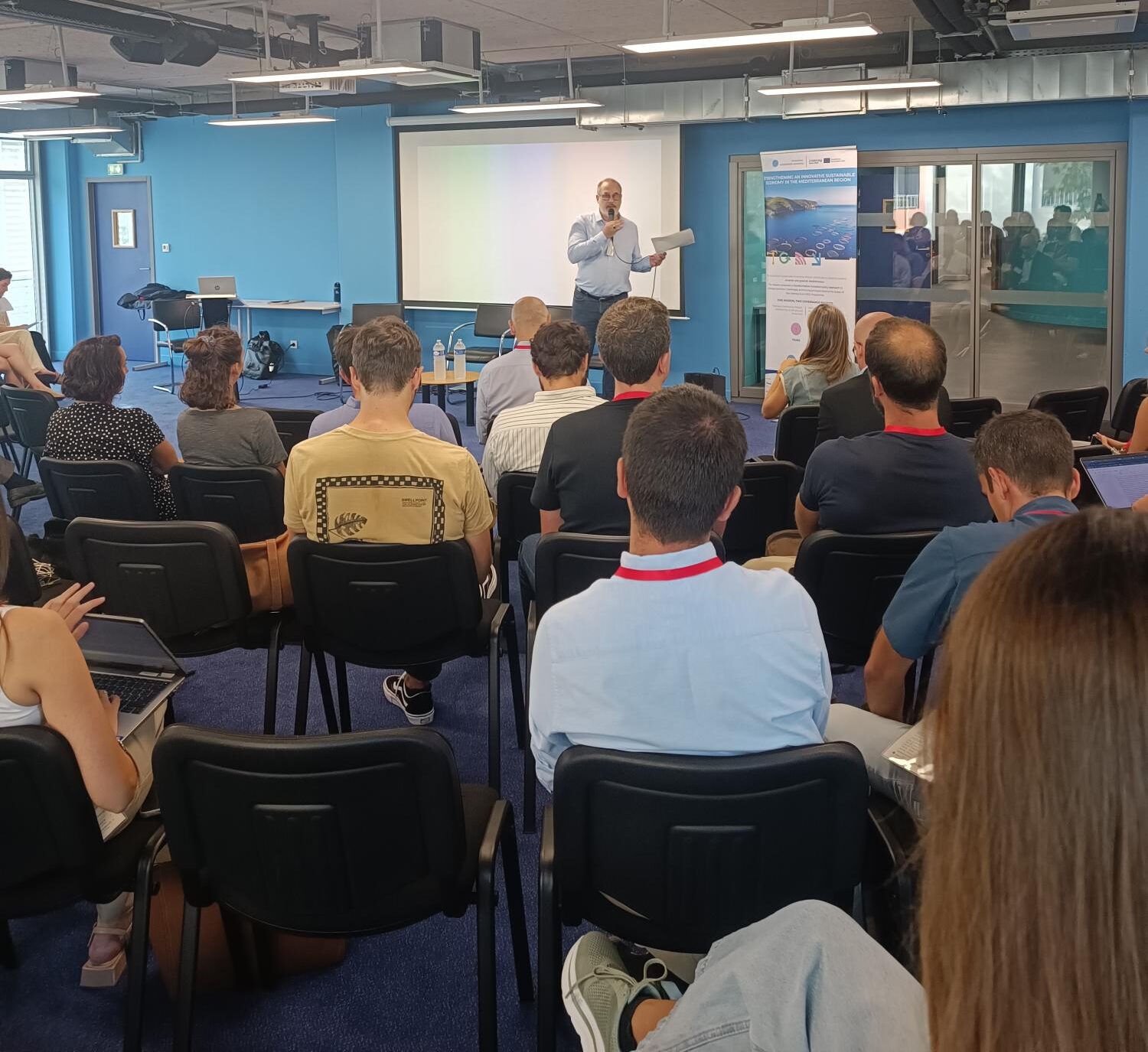
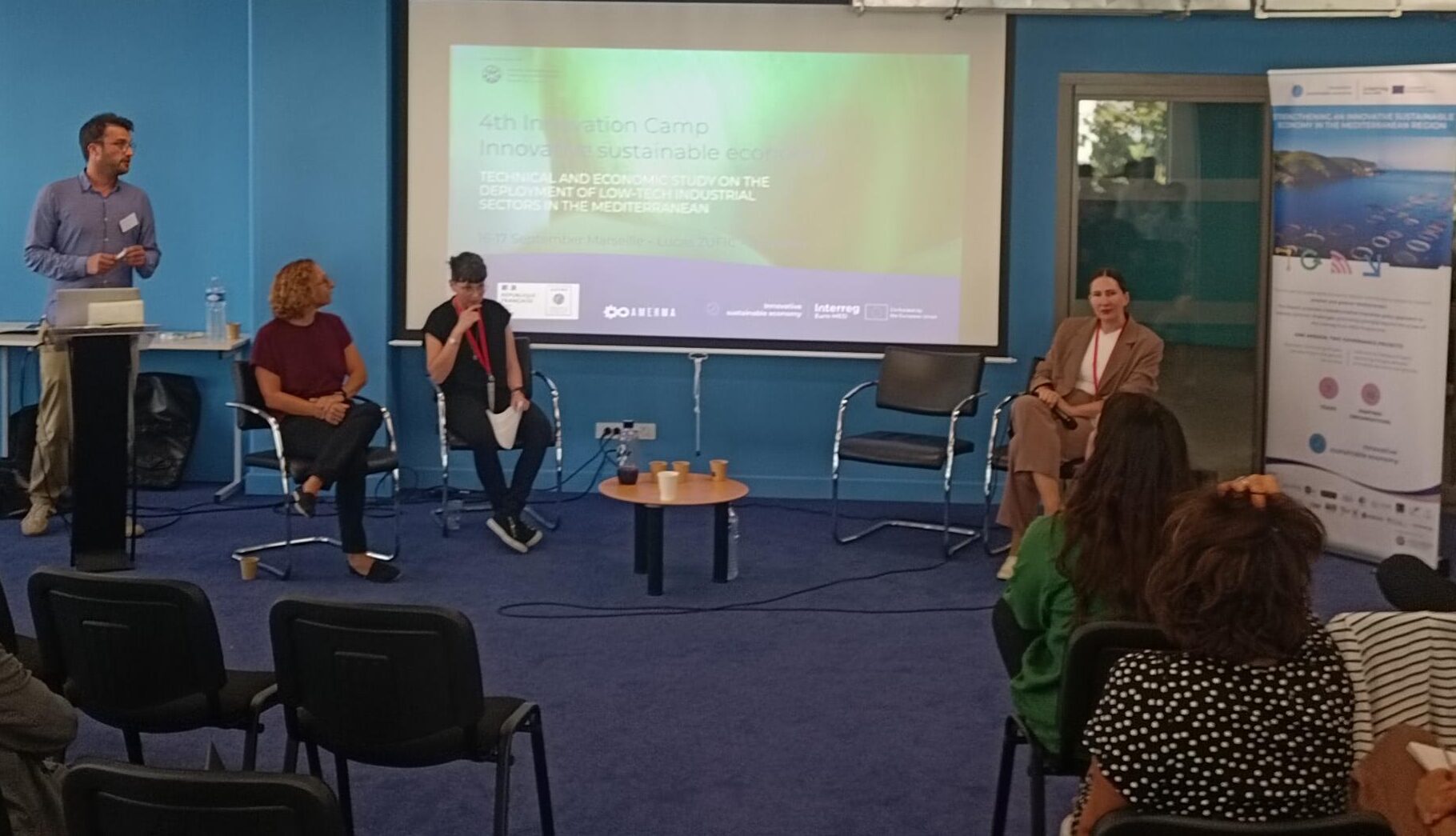
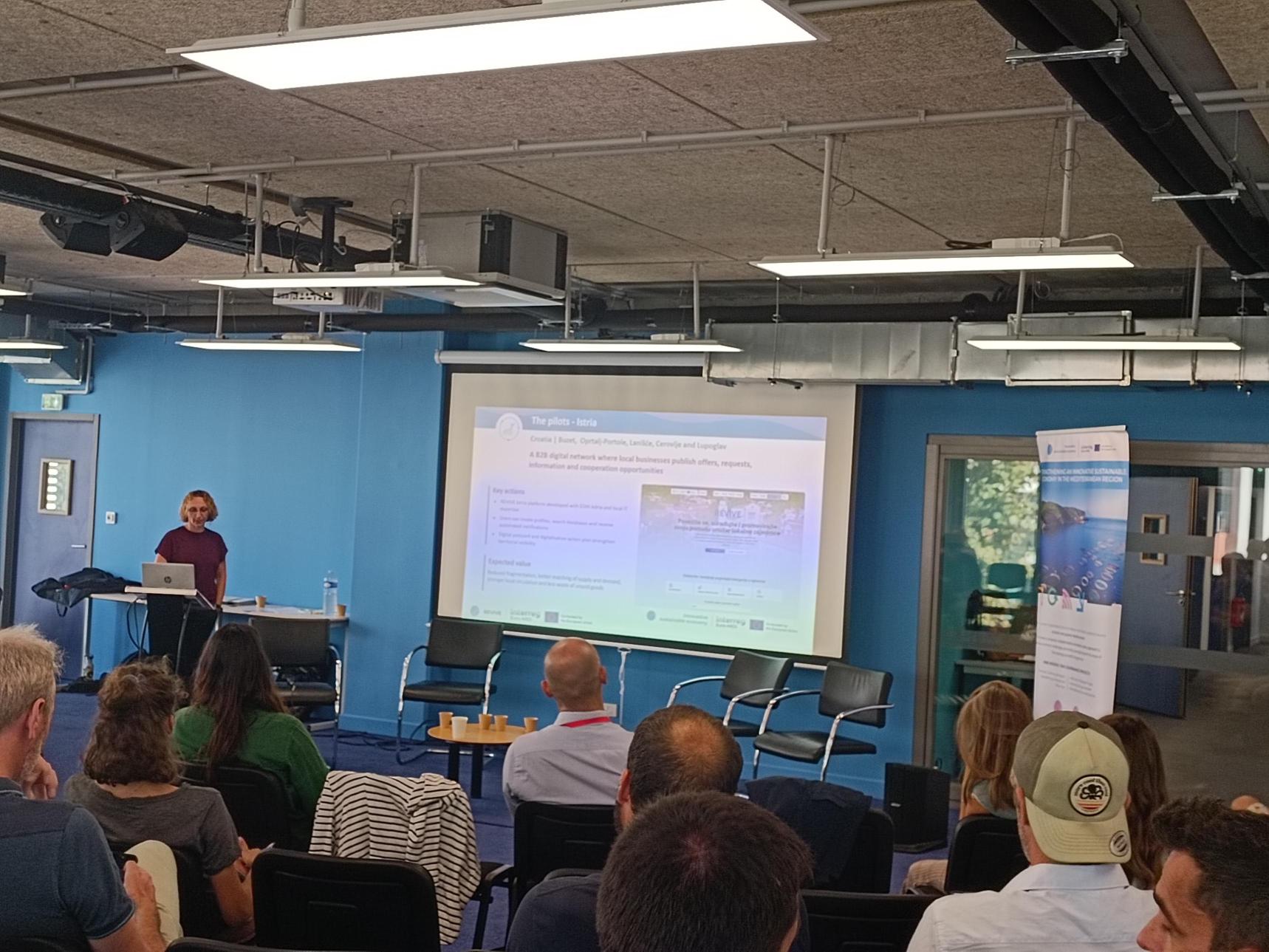
The BIOSTARS project participated in the 4th Innovation Camp of the Interreg Euro-MED Innovative Sustainable Economy (ISE) Mission, held on 16 and 17 September 2026 at Campus Biaggi in Marseille, France.
The two-day event brought together experts, practitioners, policymakers and project partners from across the Mediterranean to exchange experiences, explore practical tools and discuss how sufficiency-based approaches can contribute to more sustainable and resilient economic models. The Innovation Camp was co-organised by the French Agency for Ecological Transition (ADEME) and the Interreg Marittimo Co-Effect project.
Representing BIOSTARS, Evdokia Balamou from the Larnaca & Famagusta Districts Development Agency, Dionisis Papagelis from the Centre for Research & Technology Hellas (CERTH), Marta González from CTA (Corporación Tecnológica de Andalucía), and Laura Ciarmela from CUEIM joined the ISE Mission community in Marseille.
From sufficiency principles to practical solutions
Under the theme “Developing a sufficiency-based Mediterranean economy: Turning sufficiency into action through shared experiences, practical tools and inspiring solutions”, the Innovation Camp addressed sufficiency as a complementary pathway towards sustainability.
Rather than focusing solely on individual consumption choices, the programme approached sufficiency from a systemic perspective, considering how production systems, business models and governance approaches can evolve to better respond to environmental and social challenges.
The first day introduced the foundations of sufficiency through keynote contributions, expert discussions and examples from across the Mediterranean. Participants explored how these principles can be applied to technical systems, cities and territories, businesses and citizens, while practical workshops addressed areas including energy, living environments and production.
Connecting sufficiency with transformative innovation
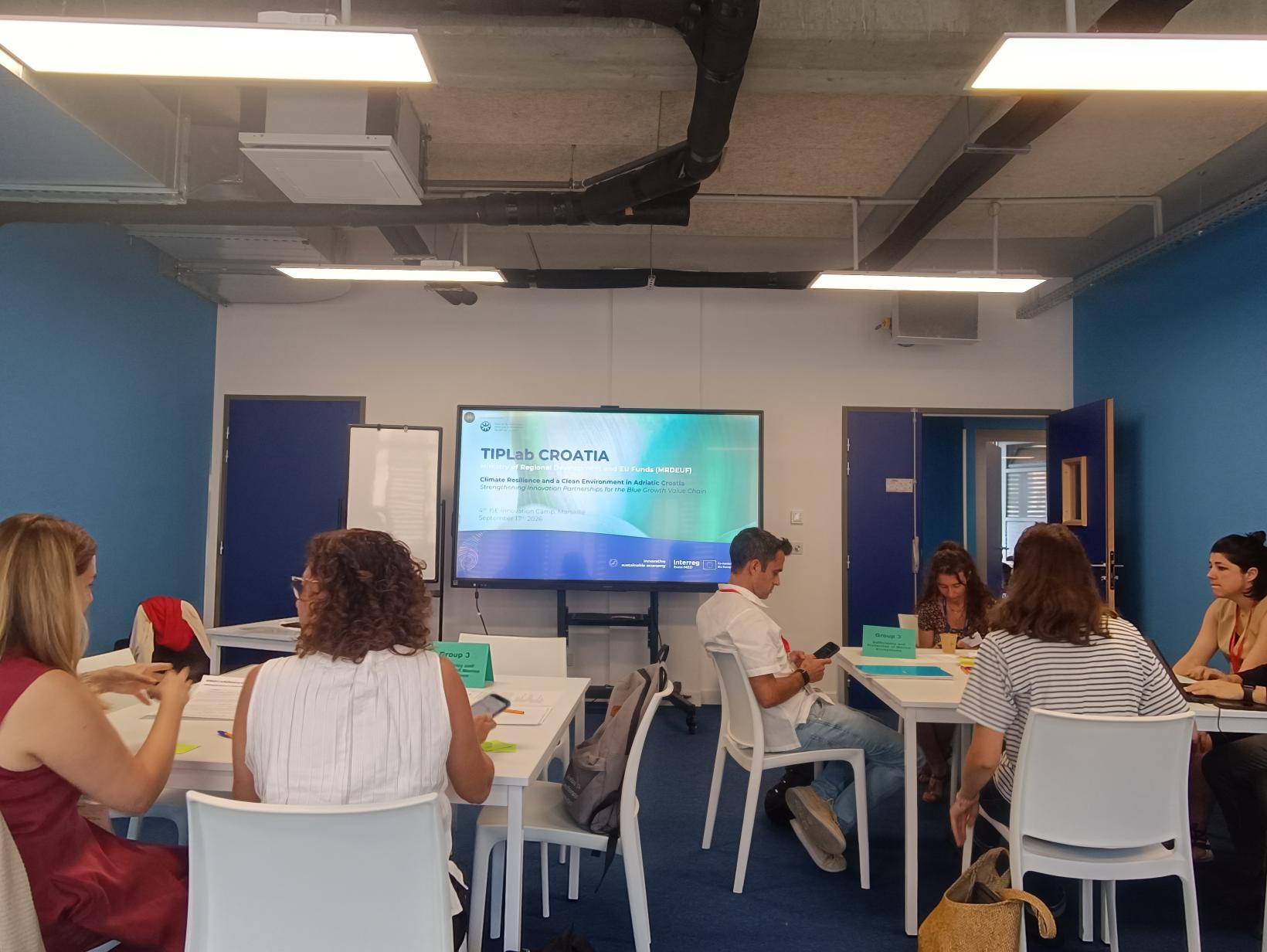
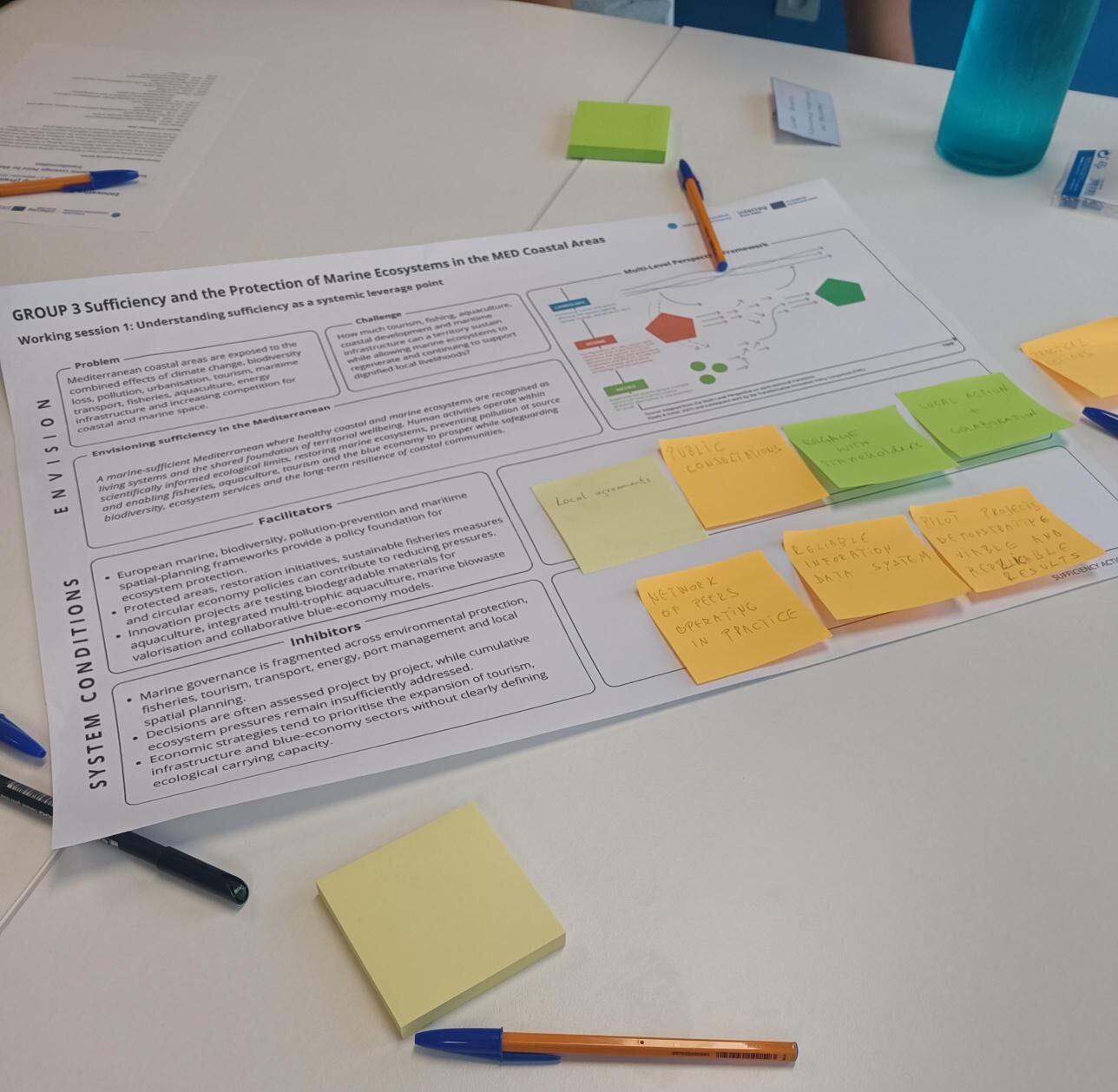
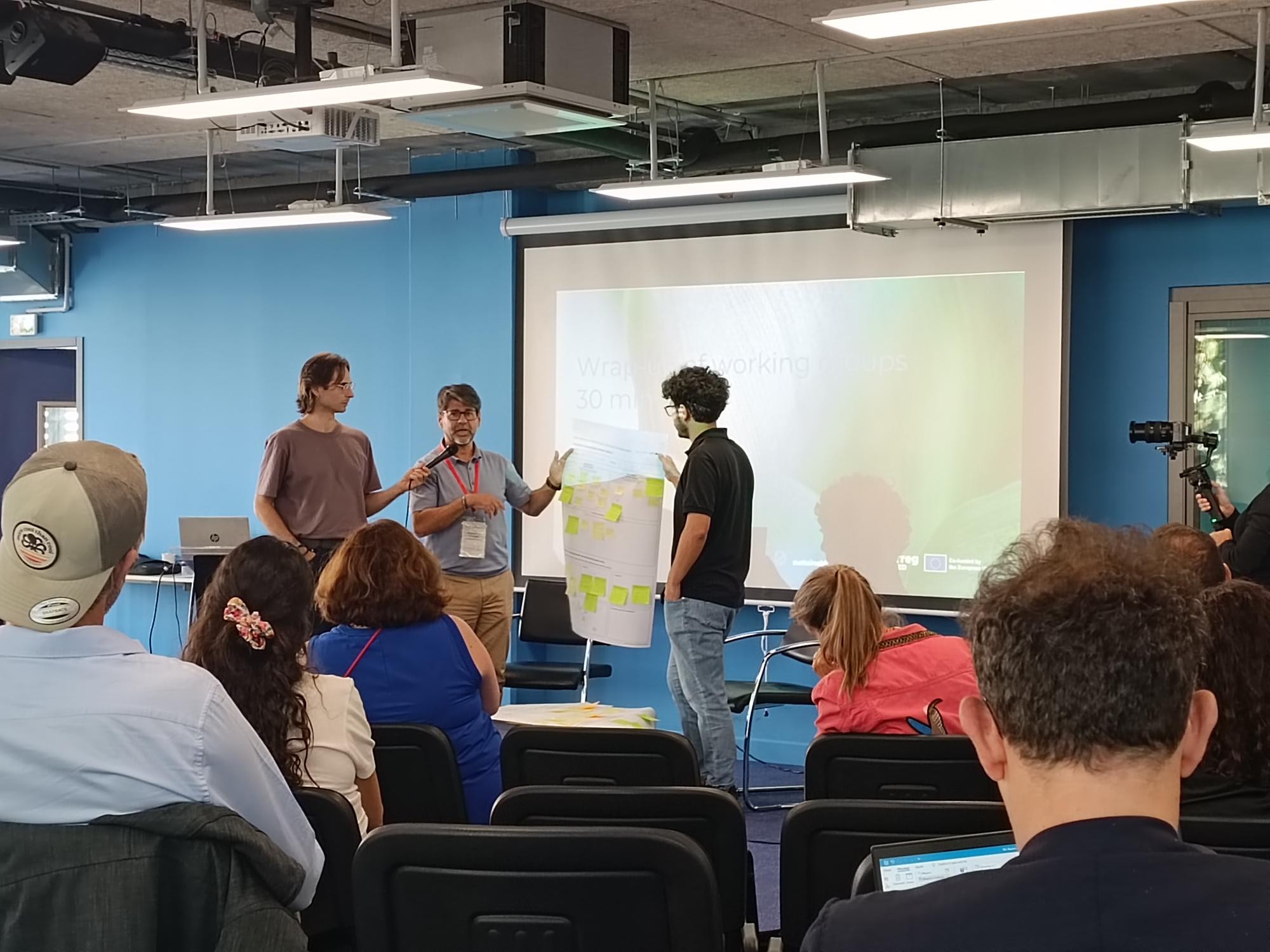
The second day moved from concepts to collaborative work, exploring sufficiency as a systemic leverage point for Mediterranean transformation. Participants worked with systems-thinking approaches and the Multi-Level Perspective (MLP), examining challenges particularly relevant to Mediterranean territories, including water scarcity, resource extraction and biocapacity, and the protection of marine ecosystems in coastal areas.
Working sessions also explored the contribution of Transformative Innovation Policy Labs (TIP Labs) and identified opportunities to transfer and mainstream sufficiency-oriented approaches across projects and initiatives.
For BIOSTARS, participation in the Innovation Camp provided an opportunity to exchange experiences with other members of the Interreg Euro-MED community and explore approaches that can contribute to more sustainable territorial development, innovative business models and resilient local ecosystems.
By engaging in these collaborative spaces, BIOSTARS continues to strengthen its links with the wider ISE Mission community and explore synergies that can support its work to foster bioeconomy entrepreneurship, social innovation and sustainable transformation in Mediterranean rural areas.