
The project presented its approach to strengthening local engagement and building sustainable bioeconomy ecosystems, drawing on experiences from rural territories in Spain and Greece.
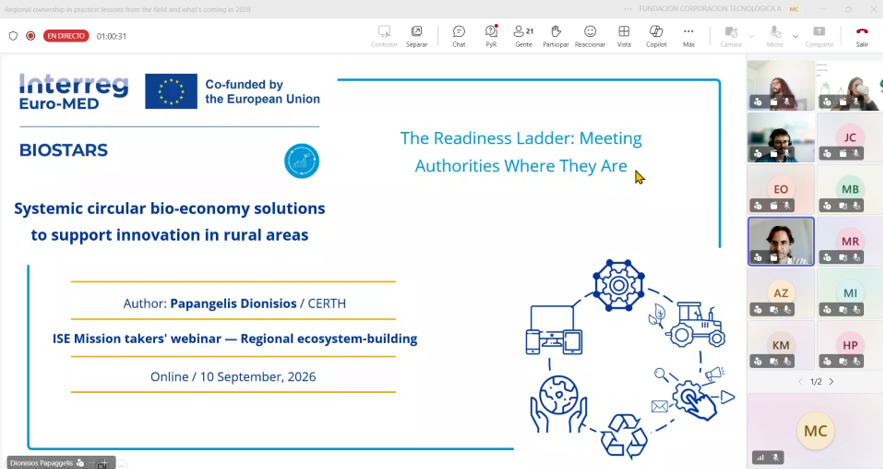
The European BIOSTARS project participated in the ISE Mission Takers’ Webinar, “Regional ownership in practice: lessons from the field and what’s coming in 2028”, held online on 10 September 2026. The event brought together representatives from European projects and organisations to exchange experiences on strengthening regional ownership of circular economy initiatives and ensuring their long-term impact beyond EU funding.
The webinar featured contributions from ACR+, AViTeM (REPper), ECOREC (CirBioWaste) and the Local Alliance, exploring the challenges of moving from formal stakeholder participation towards genuine local engagement and shared responsibility. Discussions also addressed the opportunities and challenges associated with the upcoming EU funding period (2028–2034).
Adapting bioeconomy strategies to local needs
Representing BIOSTARS, Dionisios Papangelis from the Centre for Research and Technology Hellas (CERTH) presented the project’s approach to developing sustainable rural bioeconomy ecosystems, highlighting the importance of adapting innovation strategies to the specific circumstances and capacities of each territory.
His presentation introduced the Readiness Ladder, a framework that identifies four stages of territorial development — Awareness, Understanding, Action and Institutionalisation — to help determine the most appropriate interventions for each local ecosystem.
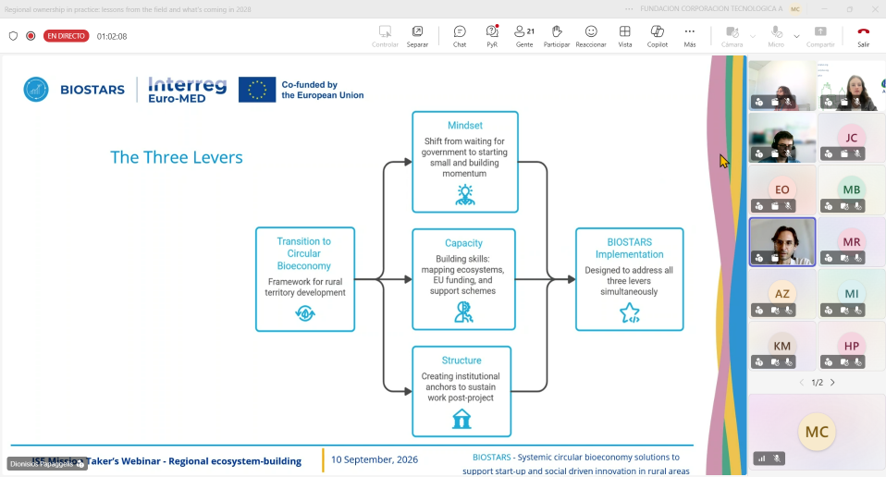
He also highlighted three essential factors for ensuring the long-term sustainability of rural bioeconomy initiatives: mindset, capacity and structure. These involve encouraging proactive local engagement, strengthening skills and knowledge, and establishing institutional frameworks capable of sustaining progress beyond the project’s lifetime.
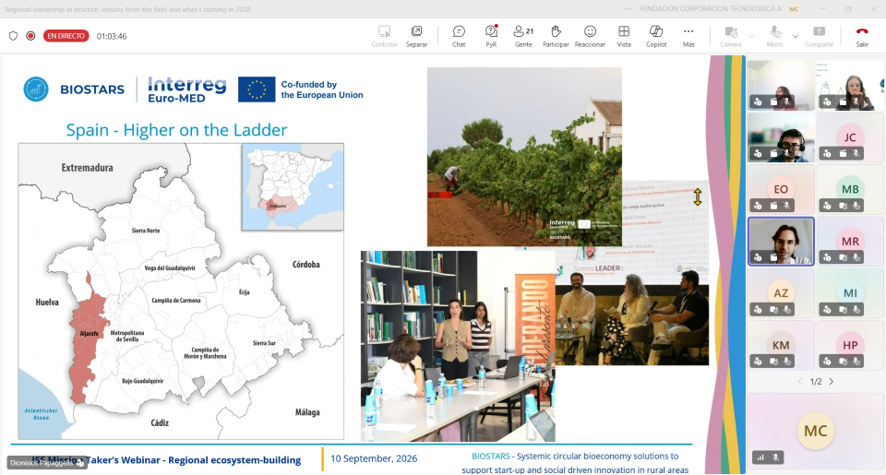
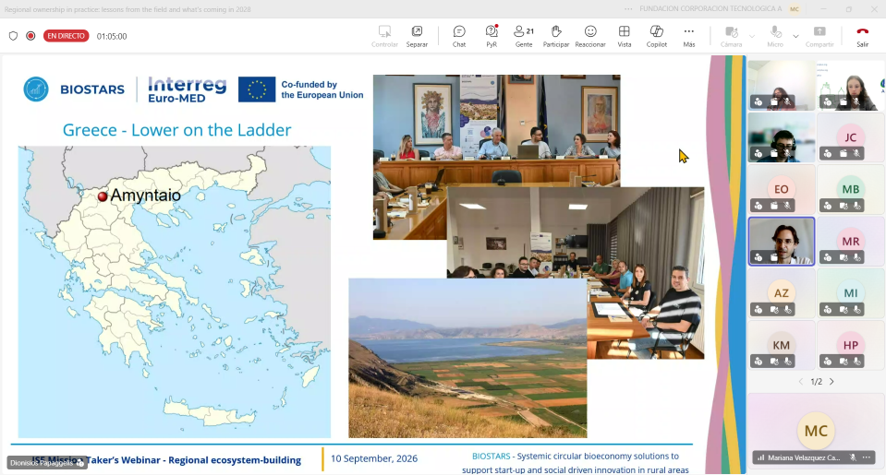
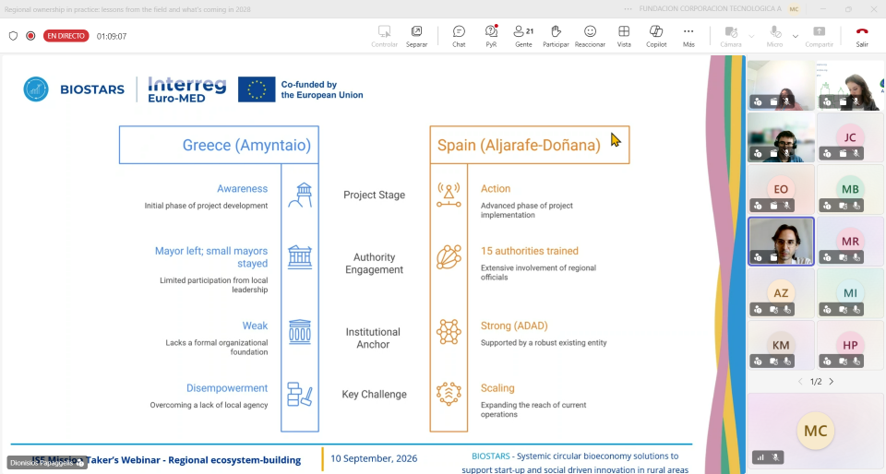
To illustrate this approach, BIOSTARS shared experiences from two of its participating territories: Aljarafe-Doñana in Andalusia (Spain) and Amyntaio in Western Macedonia (Greece).
In Spain, the project builds on established local partnerships and institutional structures that facilitate cooperation with public authorities and support the implementation of bioeconomy solutions. In Greece, where the territory is undergoing a significant economic transition, BIOSTARS focuses on raising awareness, engaging local stakeholders and identifying new opportunities for entrepreneurship and sustainable rural development.
These experiences highlighted a key lesson: successful rural innovation requires strategies tailored to each territory’s starting point, rather than a one-size-fits-all approach.
Through its participation in the webinar, BIOSTARS contributed practical insights into how European rural communities can strengthen local ownership, build innovation capacities and create lasting opportunities through the circular bioeconomy.
Explore the BIOSTARS Toolbox, which provides practical resources and tools to support bioeconomy innovation and ecosystem development in rural areas: https://biostarstoolbox.eu/