
BIOSTARS continues strengthening the capacity of public authorities and territorial stakeholders to promote sustainable bioeconomy ecosystems, rural entrepreneurship and innovation in Mediterranean territories.
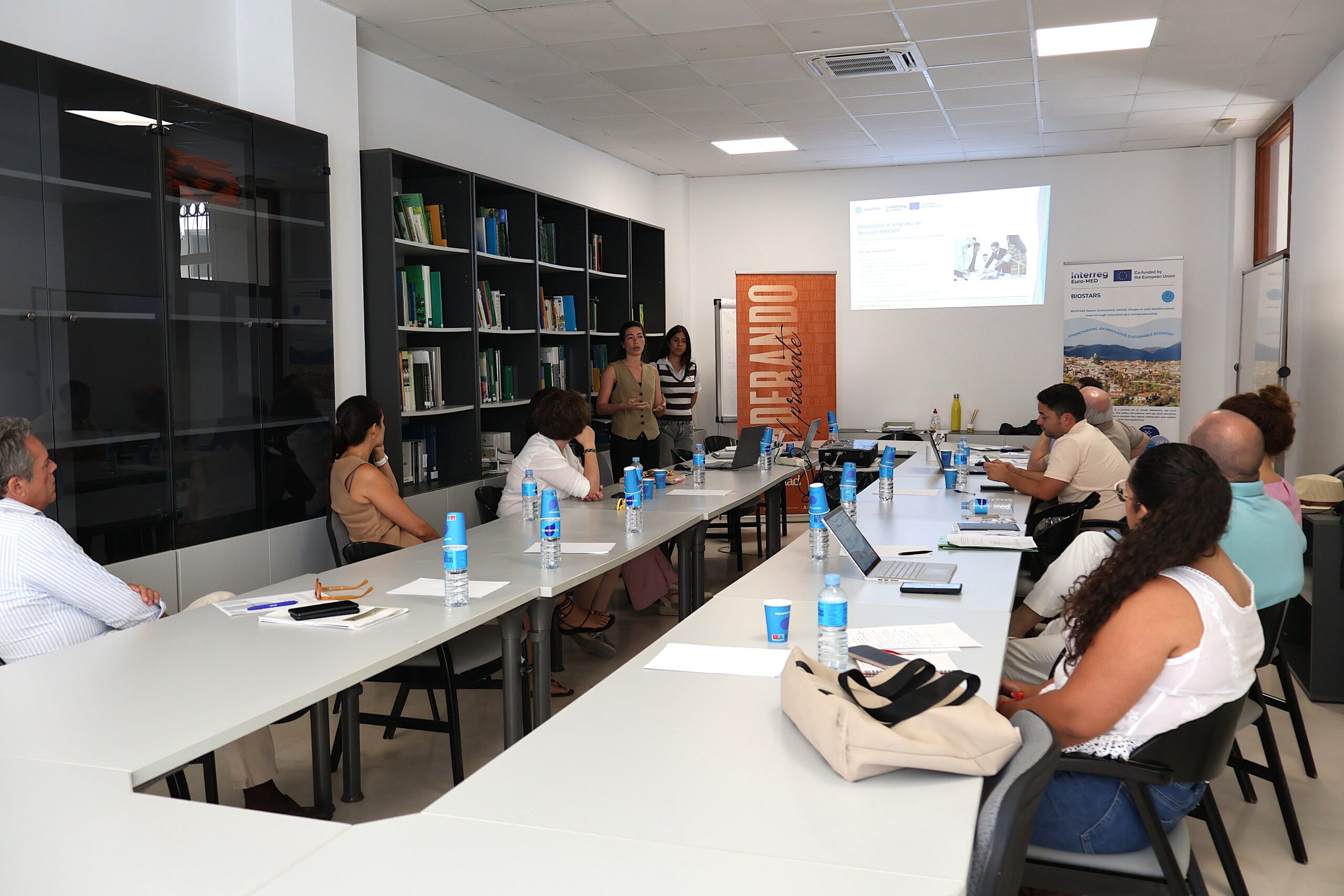
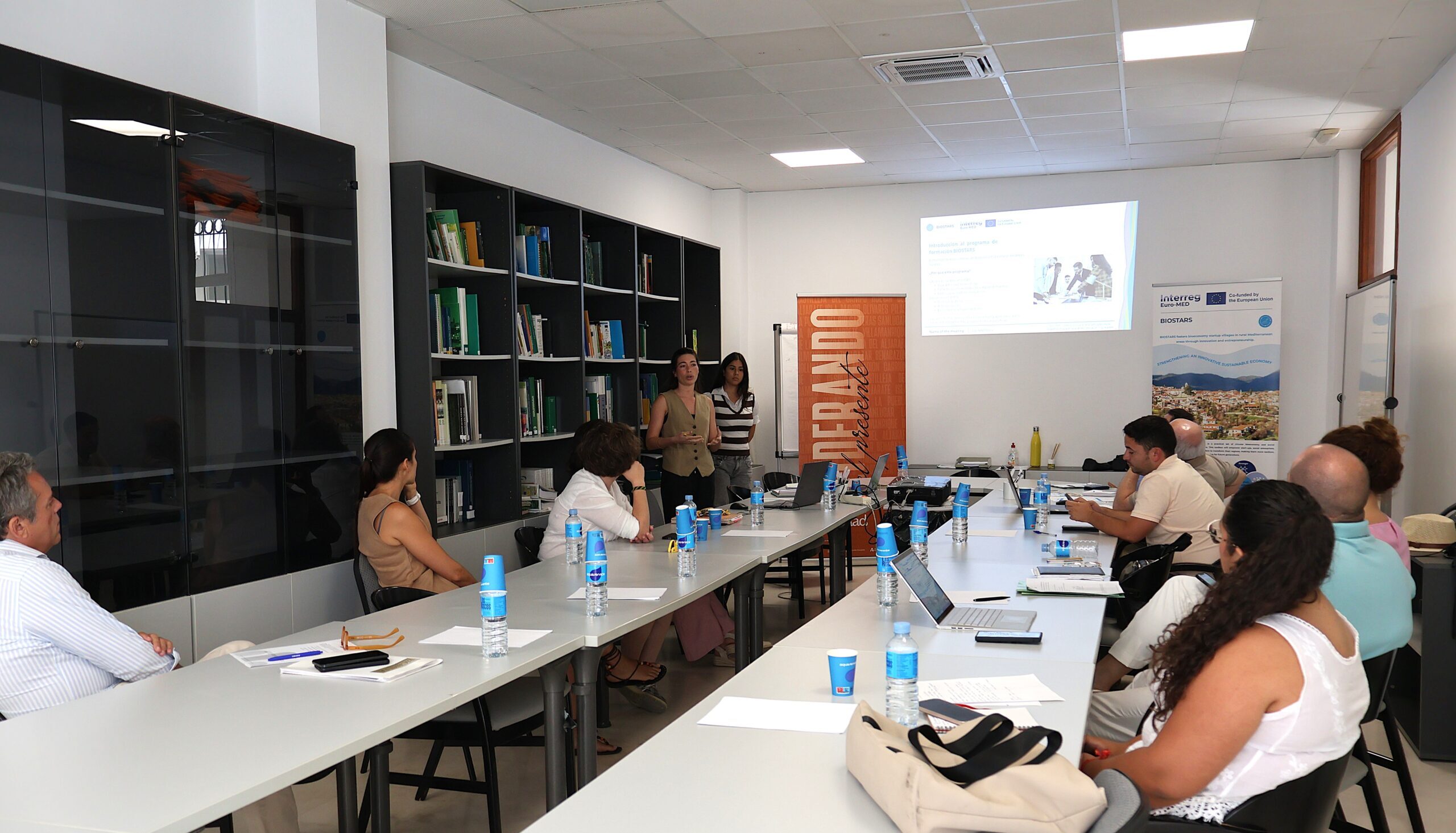
On 13 July, the project held a training session for public sector stakeholders at the headquarters of project partner ADAD (Grupo de Desarrollo Rural Aljarafe-Doñana) in Pilas, Seville. The event brought together 15 participants, including representatives of local authorities, rural development organisations, cooperatives and other actors working across the Aljarafe–Doñana area.
Delivered in Spanish and adapted to the Andalusian context, the session addressed some of the main challenges faced by public authorities when supporting rural bioeconomy initiatives. Particular attention was paid to regional governance structures, stakeholder coordination, territorial innovation ecosystems and the funding opportunities available through European, national and regional instruments.
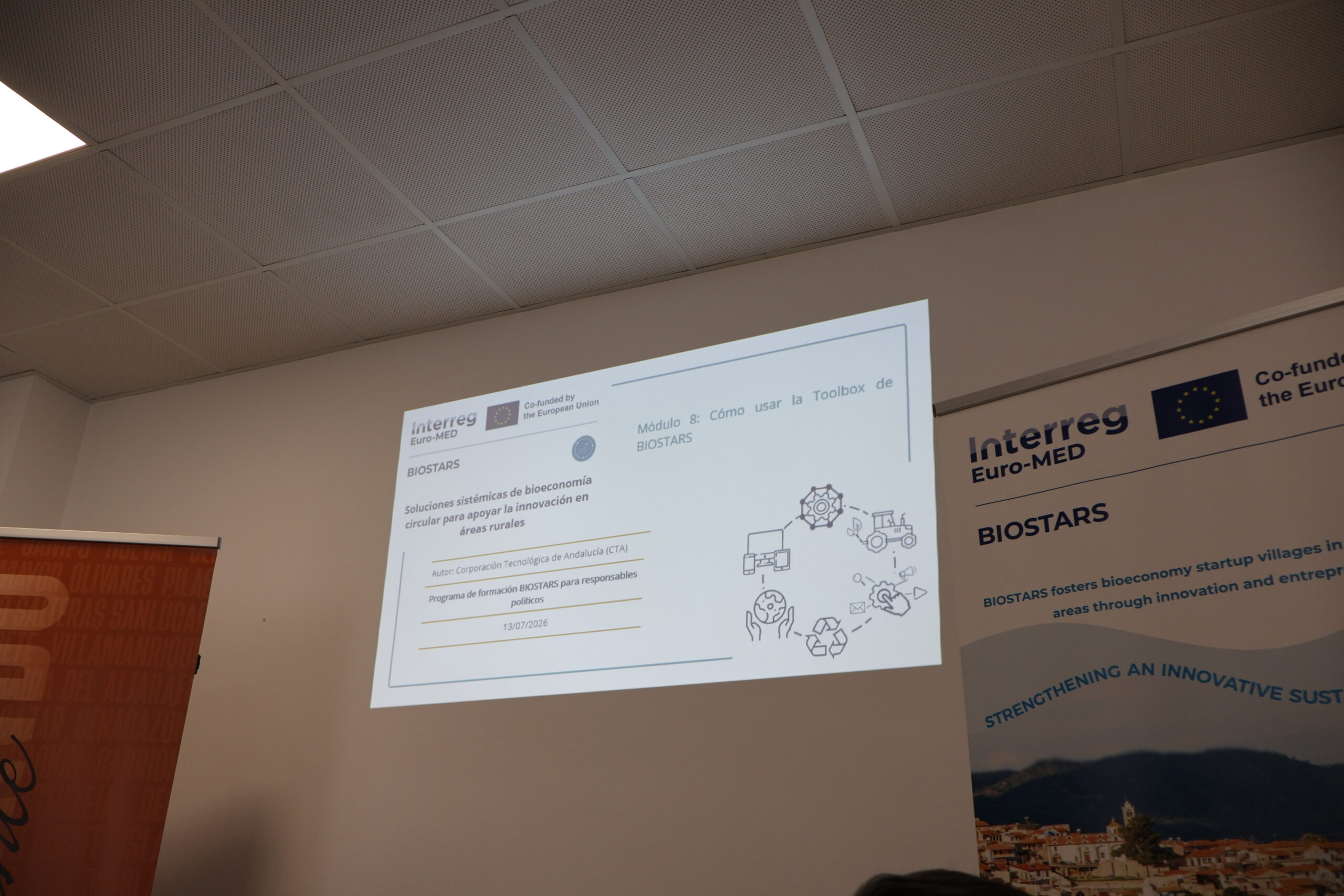
Participants were introduced to the BIOSTARS Training Programme and explored three of its main areas: institutional frameworks and governance for rural innovation; funding, financial instruments and support measures for the bioeconomy; and the practical use of the BIOSTARS Toolbox.
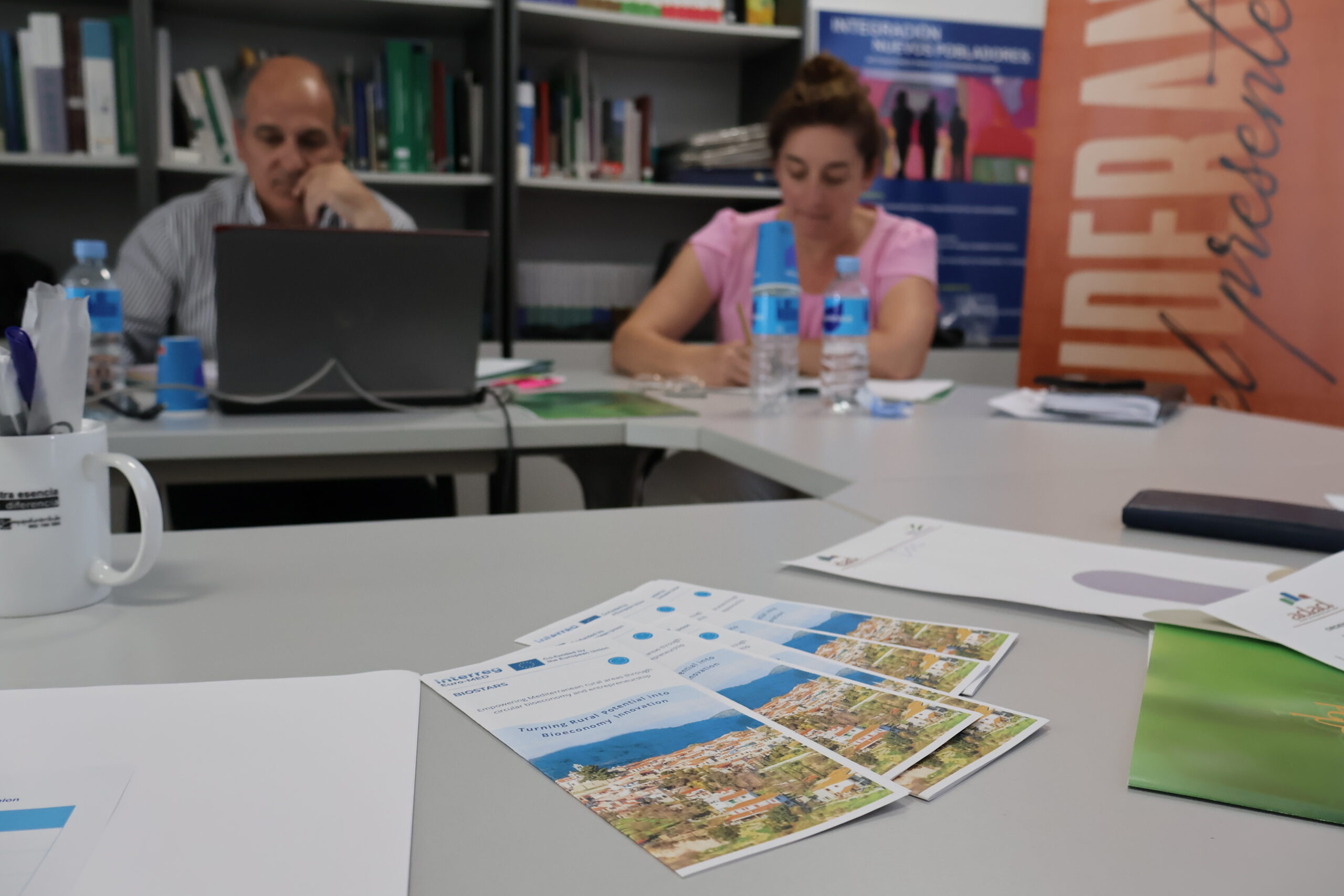
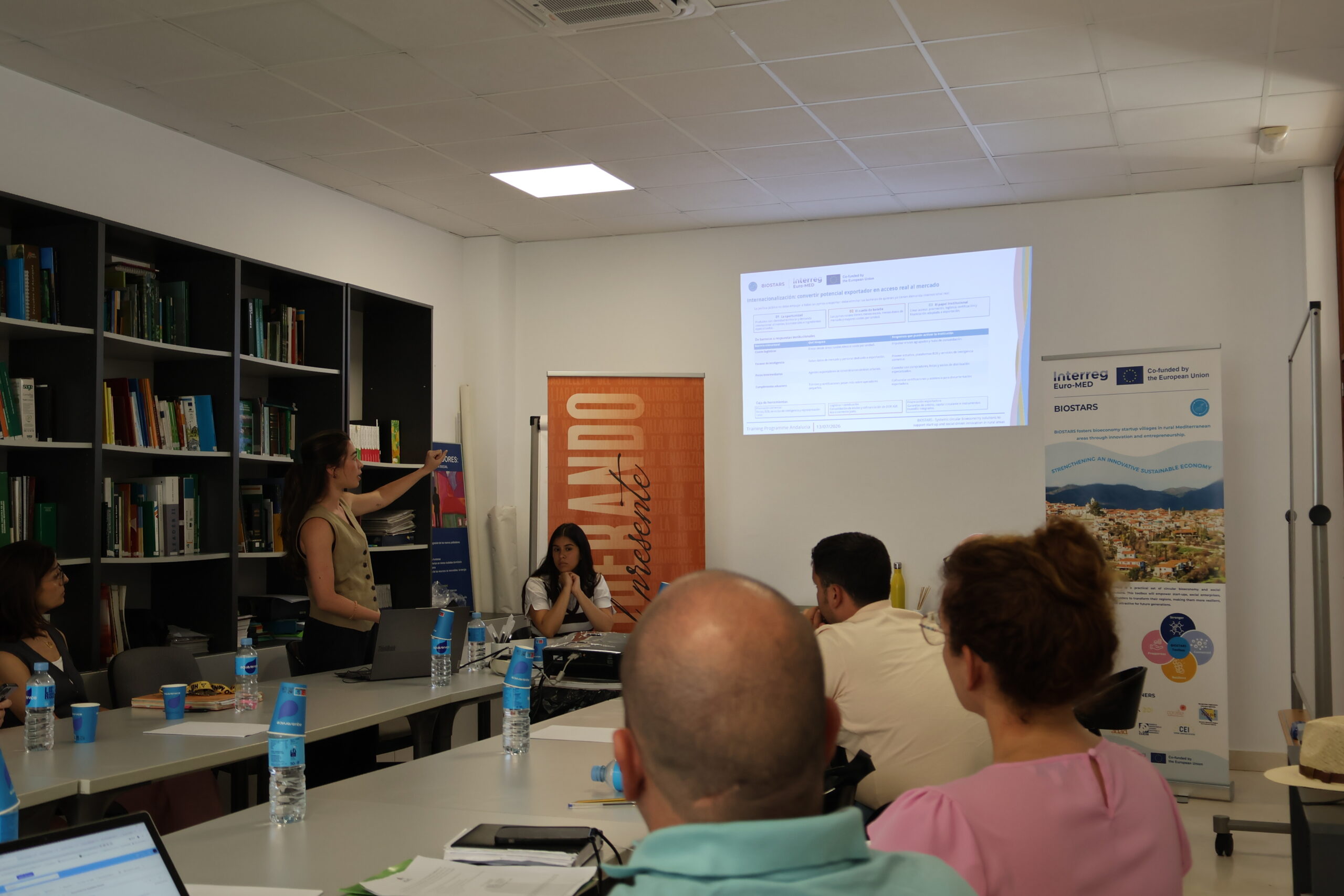
The training highlighted how multi-level governance, cooperation between public authorities and local stakeholders, and initiatives such as the LEADER Local Action Groups can contribute to building stronger rural innovation ecosystems. It also encouraged discussion on how funding programmes such as ERDF, EAFRD, Horizon Europe, LIFE and InvestEU can support bioeconomy projects and innovative rural enterprises.
The BIOSTARS Toolbox attracted particular interest due to its practical and user-oriented approach. Participants recognised its potential to help territories assess their readiness, identify appropriate support measures and strengthen their local bioeconomy and entrepreneurship ecosystems.
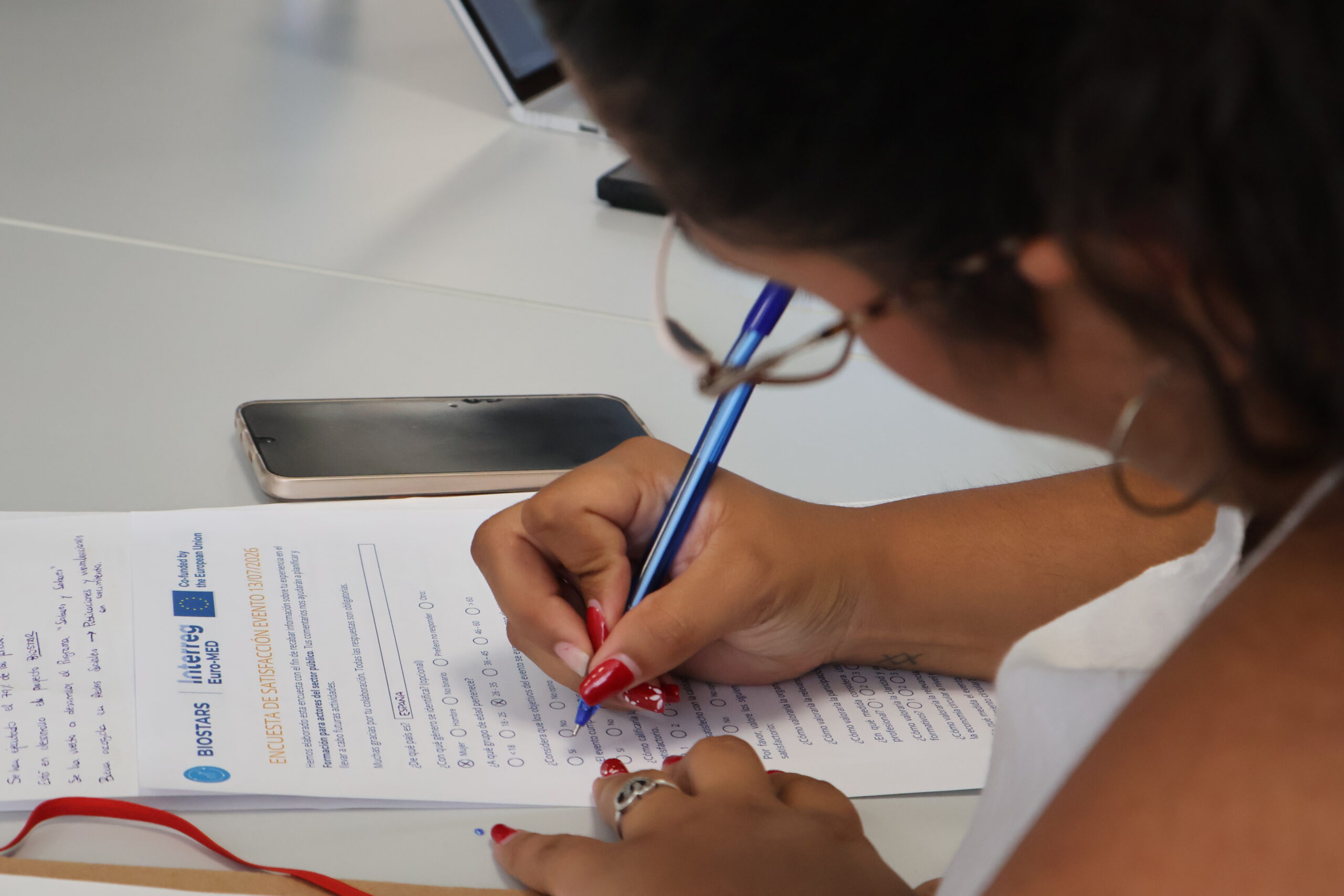
Feedback collected after the event was highly positive. Participants valued the relevance of the topics, the quality of the training materials and the contribution of the session to improving their understanding of rural bioeconomy and circular entrepreneurship. They also expressed strong interest in future BIOSTARS training and networking activities, while suggesting that upcoming sessions include further practical examples and territorial case studies.
Organised by ADAD with the active participation of Corporación Tecnológica de Andalucía (CTA), the event forms part of BIOSTARS’ capacity-building activities to provide public authorities and rural stakeholders with the knowledge, tools and resources needed to turn local bioeconomy opportunities into sustainable territorial development.